


There's a nervous excitement. Visible is the frosty air emanating from my competitors as they perform the "starting line" jiggle on the starting line.
A rapid twitch of the hips.
I'm participating in my local 5km community parkrun and I'm serious. The countdown begins...
Hold on. I have to start my device. So does the person beside me.
The person in the line tuts. I won't start until… yes! Signal acquired, and I'm running.
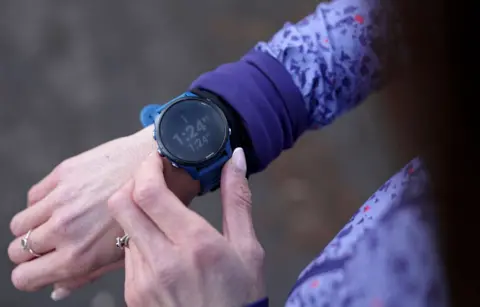
In the mele, it's difficult to see a wrist without a smartwatch on it. And this isn't only us athletes who use them.
It's a booming, multi-billion pound industry. Names like Apple Watch dominate, all offering an broad array of different versions to fit a range of needs. Based on how feature-packed the watch you choose, costs can range from an affordable sum to a significant investment.
"I find it infuriating, I can't switch off."
"It comforts me… It feels like a supporter guiding me."
"Please don't notify me I've experienced a bad night's sleep."
A handful of the responses I've had from like-minded smartwatch wearers when I inquire what they their opinion is on theirs.
The Monitoring Conundrum
My feelings on mine? Currently, annoying. It's reporting my speed is wrong, causing me to question whether the overhead branches along my route are interfering with my GPS connection.
Millions of us strap these small gadgets onto our arms and keep them on 24/7, ostensibly comfortable with the fact they're perpetually monitoring us.
A distant memory are the days when we used them exclusively to give us an estimation of our step count. Now, they can track our sleep quality, blood pressure, glucose levels, our VO2 max.
It's difficult to find a bodily function they fail to monitor.
But do they do what they advertise? And are the data points we obsess over a faithful picture of our actual health? Do they improve our overall health, or do the avalanche of measurements and motivational messages just contribute to our daily stresses?

Addiction or Aid?
"I find myself getting a bit preoccupied with mine," a wearer confesses.
While she values how her device monitors her exercise, she finds some of its other capabilities "excessive" at times - a feeling that became apparent during a significant period.
Until she found out she could change its configuration, her smartwatch constantly alerted her she was being insufficiently active enough. In a new phase, the watch frequently reports her she's had a bad night's sleep.
"I have a six-month old, it's unnecessary for me to be informed I'm tired," she says. "I know that only too well."
Is it not possible to just stop wearing it?
"I suppose I could, theoretically, but I have this love-hate relationship with it," she says. "I love it for its workout tracking, but I'm unsure whether the additional features it can now do is perhaps overkill for me."
Inside the Device
Different brands of smartwatch has its own novel way of measuring your health metrics and interpreting your data, but the most use optical sensors on the underside of the watch.
They usually project small, green LED lights onto your skin which can monitor blood flow, identifying your BPM. Higher-end devices measure changes in the skin conductance that runs through the skin to get an idea of your recovery state.
Expert Perspectives
A data scientist says that in general for smartwatches, it's a "fine balance" - while the rapidly advancing tech could realistically save lives, "spotting abnormalities before we notice anything", it could also turn us device users into the "worried well".
He points out that the most advanced wearables can carry out tests like electrocardiograms (ECGs), which regularly monitor how healthy the heart is. They can notify if someone is experiencing atrial fibrillation (AF), where there is erratic impulses in the heart causing an irregular heartbeat.
This does not automatically signal someone is imminently going to suffer a cardiac event, but it can give an early warning they might be more at risk of a blood clot in the future.
But how to make sense of these readings is complicated. The expert concerns that as further capabilities are added, people may find it hard to fully understand their data.
"I'm not entirely convinced that being able to monitor so many metrics is such a beneficial thing," he says.
A clinical psychologist specialising in patient behaviour agrees. Her work into the effect of wearable tech on a set of cardiovascular patients suggested a minority of those who were given devices to monitor their cardiac function experienced increased anxiety and were "more inclined to use doctor's time".
She identified a cycle with her patients - they spotted a alarming metric on their watch. They became worried. Their pulse went up. They got even more concerned. They re-examined the data, and their reading rose further.
"Upon viewing data about ourselves that we don't really understand then, of course, we are going to become concerned," the psychologist says. "We look, we obsess - it becomes a self-fulfilling prophecy."

