

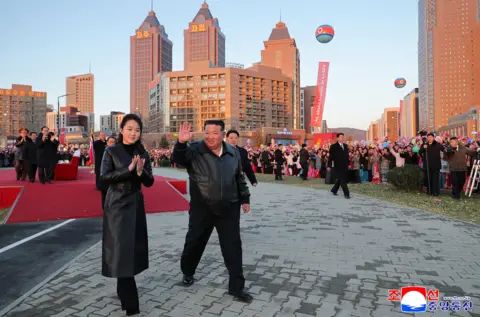
While warnings against Seoul and declarations to develop the atomic arms program, a major query hovered at the recent political assembly: would the leader's young daughter be named as the successor?
Although conclusive news did not emerge during the congress, it has fueled a intense conversation about the young girl's viability as the future ruler of the 25 million state, a government exclusively led by the Kim clan.
Heightened Presence and Analysis
The girl has become more present in regime propaganda with her parent. However, plenty about her continues to be shrouded in mystery. The regime has not once formally disclosed her name or verified her date of birth.
She was originally revealed abroad in 2013. From that point, she is commonly believed to be 13 years old, partly on agency reports.
Evidence of Heir Apparent
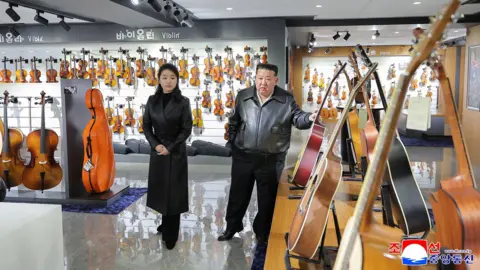
Observers point to several significant signs. Her regular appearances—often framed in the shot—and the use of honorific language traditionally used for the supreme leader are seen as strong evidence.
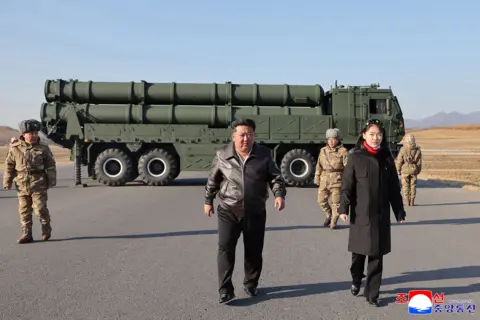
Moreover, her familiarity with the army is considered an additional important factor. She has reviewed forces and missiles with her father. On several occasions, senior officers have been photographed kneeling next to her to whisper during armed forces displays.
"The state media is employing words reserved for the ruler. It reinforces her own iconic image," notes one prominent expert.
This strategic familiarization is deemed vital, as real authority in North Korea lies with control over the army. To be a credible heir, she must present herself as a capable commander.
Controversy Over Gender and Culture
Yet, a considerable skeptical perspective persists. Some experts contend that North Korea's inherently patriarchal culture presents an formidable barrier for a girl supreme leader.
Observers highlight that women at all rank find it hard for equal recognition. Female leaders in high roles are exceptionally rare. Everyday beliefs also reflect these attitudes.
"In such cases, they finish the trip then go to the back of their car and spit thrice to ward off the misfortune," describes a former North Korean insider.
Changing Cultural Realities
Alternatively, other analysts argue that the role of women in North Korea has changed dramatically since the economic collapse.
During that time, as the state economy weakened, women often became the primary entrepreneurs, pursuing black market business. This has reportedly led to a slow change in societal perceptions.
One researcher who has spoken to over 120 former residents states that it is today less unusual to see females in leadership roles within the country.

"We must not think of North Korea with our framework. We must see them as the Joseon dynasty," notes the researcher. "What person would have the audacity to oppose an individual of Kim lineage who is ascending to the supreme position?"
Political Moves
Current party appointments are also being scrutinized. The promotion of Kim Yo Jong, the leader's sister, to a key propaganda role is seen by some as a measure to position a guardian for the young successor.
Finally, observers are divided. Some interpret the focus on Ju Ae as a strategic ploy to humanize the leader's image and signal another family transfer of power. Others maintain the signals of her preparation are too strong to ignore.
Regardless, the discussion in and of itself may serve a function for the leadership, maintaining international eyes firmly locked on the isolated Kim family leadership.


